Romania
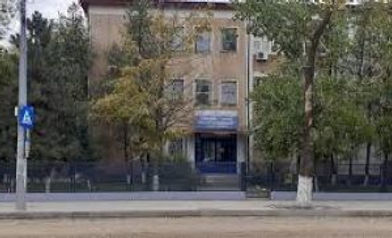
Colegiul Tehnic Edmond Nicolau Focsani
The Edmond Nicolau Focşani Technical College, established in 1972 starts with two classes of the professional school having a mechanical profile, is a public, non-profit school that has had an upward evolution, the profiles for which the students are prepared being adapted to the economic development of the area in which we are located.
The school is located in Vrancea county, which is one of the underdeveloped regions of Romania, based mostly on agriculture. In the last decades, we have been making efforts for economic development based on industry and services, areas in which we also make our contribution.
With 680 students, aged between 14 and 19, enrolled in high school and vocational school, 65 teaching staff and auxiliary staff, our school is one of the largest in our county.
The main objective of the school management is to provide training adapted to the requirements of economic agents. Students are enrolled in courses in electronics and automation, electricity, electronics, mechanics, electromechanics, transport technicians and CAD designers, as well as theoretical courses, Mathematics and Computer Science. Vocational school students are trained in mechanical, electromechanical or electronic fields.
Teaching is supported by the school's equipment. The school's workshop as well as the school's central building were rehabilitated with funding from the World Bank and PHARE for technological education with 14 laboratories and practical training workshops. Theoretical technical disciplines contribute to students’ specialization.
According to our records, more than 70% of our students are from rural areas and come from families with a precarious financial situation, and there is a tendency to increase this percentage in the last 5 years. Those with the lowest incomes receive government subsidies under the "Money for School" program. Vocational school students have vocational scholarships.
The school has contracts with more than 20 enterprises from Focșani, to provide practical training for students from the vocational school.
There are courses for people who for various reasons left the education system earlier than they should have. they have na entrance exam, the length of the course varies from case to case, and finally, they have the same type of exams as regular course students.
Students are involved in cultural activities, sports, contests and competitions.
Most teachers passed the national exams to obtain academic degrees in school education. Some professors and engineers have attended postgraduate courses, 5 professors are PhD students and 4 professors are PhD.
Since 2004, we have been involved in Comenius and Grundtvig Mobility, staff mobility or adult education. The European integration of our institution is highlighted through preparatory visits (Comenius) and POSDRU study visits, European volunteer internships, POSDRU projects, Erasmus+ mobility projects and strategic partnerships in the field of education.
We are engaged in a comprehensive modernization process, aided by digital media education.
21st Century competencies are a teaching priority in our school, with technological innovation as the integrative objective.
To support our students, extracurricular astronomy courses, virtual laboratories, STEAM, and applied sciences have been organized offering them support in their personal development.
Although there are students who have educational achievements, obtaining prizes in national school competitions, there are also underperforming students, more likely inclined to drop out of school earlier. Although the school is making efforts, it is found that the percentage of school dropouts is still high, around 10%, according to official records.
Considering the two categories of students, we make efforts to find methods and means to support the development of highperforming
students, equally with finding ways to motivate students with school dropout tendencies to continue their studies.
+40771606775